Nothing Found
It seems that we can’t find what you’re looking for. Perhaps searching can help.
About the author:
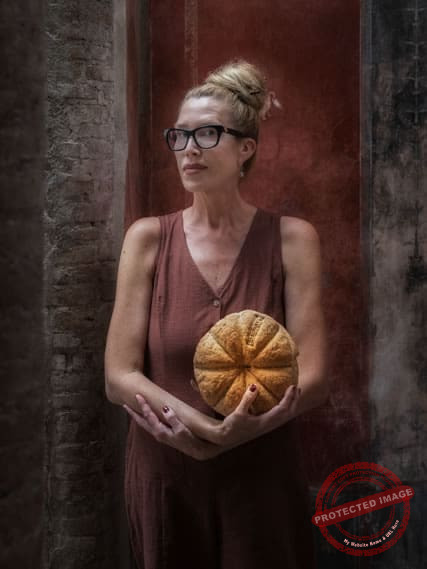
Farrell Monaco is an award-winning Classical archaeologist and food-writer whose research centers on food, food preparation, and bread in the Roman Mediterranean. She writes regularly on the role of food and food preparation in Roman daily life on her site, Tavola Mediterranea, and publishes in both English and Italian. Farrell has also written exclusively for Atlas Obscura and BBC Travel. Her work has been featured prominently by National Geographic, Popular Science, The Atlantic, the BBC, The Guardian, The Telegraph, The Economist, Esquire Magazine, SAPIENS Magazine, Saveur Magazine and Milk Street.

Jul 15
It’s worked thus far… Tea cosies on, England fans! Time for a halftime cuppa… ☕️ 🏴 #England #worldcup2026 #fifaworldcup #teacosy #teatime ...
Jul 15
Let’s do this! Come on, England!! Tea cosies on!
#england #worldcup2026 #fifaworldcup
...
Jul 13
I’ve been craving these ever since May!! During The Old School Kitchen – Culinaria Pompeiana, Jack and Sam took on the challenge of making lucanicae, the aromatic sausages that quickly became a favourite around our table. Their version was outstanding! Richly seasoned, beautifully balanced, and every bit as memorable as the other dishes we made.
Lucanicae take their name from Lucania, the ancient region of southern Italy (roughly modern Basilicata), whose communities were deeply influenced by the neighbouring Greek cities of Magna Graecia. According to Varro, the Romans learned to make these distinctive sausages from the Lucanians, likely through Lucanian soldiers serving in the Roman army. Their popularity endured for centuries: Cicero mentions lucanicae in his letters, Martial includes them among the delicacies of the Roman table, and Apicius preserves a recipe for them, demonstrating that this regional specialty had become firmly established in Roman cuisine.
Our batch was seasoned with pepper, cumin, savory, parsley, pine nuts, peppercorns, garum, and juniper berries (in lieu of laurel berries). The aroma alone transported us back two thousand years.
Many modern Italian sausages still bear the name luganega, luganighe, or lucanica, preserving a culinary tradition that has endured from antiquity to the present day.
Bravo, Jack and Sam! You’ve left me with a lasting craving. I think it’s time to make another batch! 😋
#sausages #Rome #archaeology #food #masterclass
...
Jul 12
Tea cozies on = England in! 😃 I think we’re on to something here! Join us! 🫖 ☕️ 🇬🇧
#fifaworldcup2026 #worldcup #england #teacozy
...
Jul 11
Let’s do this!! Come on, England!! 🏴
#fifaworldcup2026 #england #worldcup2026 #soccer #football
...
Jul 6
🏴 #WorldCup #fifaworldcup #England ...
Jul 6
Tea cozy on my noggin seems to be working!! Come on, England!!! #England #Worldcup #FIFAWorldCup ...
Jun 24
Recently, the Archaeological Park of Pompeii announced the discovery of another equid (either a horse or a mule) within the Casa dei Casti Amanti: a luxurious domus whose front rooms had been converted into a commercial bakery. The news immediately reminded me of an article I wrote in 2019 about this remarkable house and the five equids discovered in a stable beside its bakery.
Finds like these always give me pause. They remind us that the story of Pompeii is also the story of the animals that lived and laboured alongside its people. They powered the mills that fed the town, and like many of their human companions, perished during the eruption of Mount Vesuvius in AD 79.
Apuleius gives us one of the most vivid literary glimpses into the lives of these working animals in The Golden Ass, where Lucius is transformed into a bakery donkey:
“As for my comrades, the animals, what can I say? How can I describe their condition? What a sight! Those old mules and feeble geldings stood round the manger with their heads sunk down, munching through piles of chaff; their necks sagged from the rotting decay of sores; their flabby nostrils were distended from constant coughing; their chests were ulcerated from the continual rubbing of the rope harnesses; their flanks were bare to the bone from everlasting whipping, their hoofs stretched out to abnormal dimensions from their multiple circling, and their entire hide rough with decay and mangy starvation.”
Reading these words while thinking of the equids discovered at the Casa dei Casti Amanti is profoundly moving. The catilli did not turn themselves. Where water power was unavailable, horses and mules were the engines that transformed grain into flour and flour into bread.
In honour of these four-legged pistores, I turned once again to Roman baking and prepared Cato’s Grape Must Cakes.
Read more via link in bio or here:
https://tavolamediterranea.com/2018/09/22/baking-bread-romans-part-v-grape-must-cakes/
Photo: Farrell Monaco
#pompeii #archaeology #animals #bread #bakery
...
Email: [email protected]
Ph: 310-596-2424 (USA) | 020 3239 8691 (UK)