We have partnered with Goldbelly! As a result, our Macellum is now closed. Fresh bread, linen bread bags, and culinary tools can now be purchased at our online bakery:
Pistrinum by Tavola Mediterranea

…now shipping nation-wide on Goldbelly.com!
We have partnered with Goldbelly! As a result, our Macellum is now closed. Fresh bread, linen bread bags, and culinary tools can now be purchased at our online bakery:

…now shipping nation-wide on Goldbelly.com!
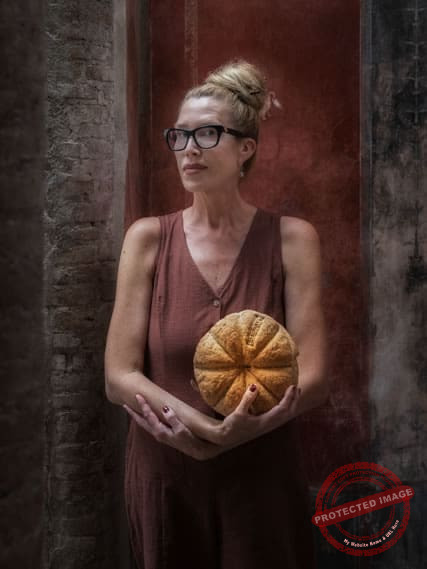
About the author:
Farrell Monaco is an award-winning Classical archaeologist and food-writer whose research centers on food, food preparation, and bread in the Roman Mediterranean. She writes regularly on the role of food and food preparation in Roman daily life on her site, Tavola Mediterranea, and publishes in both English and Italian. Farrell has also written exclusively for Atlas Obscura and BBC Travel. Her work has been featured prominently by National Geographic, Popular Science, The Atlantic, the BBC, The Guardian, The Telegraph, The Economist, Esquire Magazine, SAPIENS Magazine, Saveur Magazine and Milk Street.

Jul 25
From the BBC:
A new fresco depicting an Italian flatbread has been discovered at Pompeii. Culinary archaeologist Farrell Monaco explains why it’s not a pizza.
Read more via link in bio or here: https://tavolamediterranea.com/2023/07/04/adoreum-the-newly-discovered-flatbread-fresco-of-pompeii/
#Pompeii #Cake #religion #archaeology #Food
...
Jul 24
From: Atlas Obscura
To recreate a meal that comes close to what may have been served in a Pompeian popina, one can begin by looking at the archaeological remains found inside. This includes the imagery in the frescoes painted on the service counter and the contents of the amphorae and the dolia. One dolium contained the bones of duck, swine, goat, and fish, as well as shells from land snails. The duck bones in particular correspond to the fresco of two mallards painted on the front of the counter, perhaps as a pictorial menu for the illiterate majority at the time.
Read more via link in bio or here: https://tavolamediterranea.com/2021/03/17/reconstructing-the-menu-of-a-pub-in-ancient-pompeii/
#Pompeii #Food #FastFood #Recipe #Archaeology
...
Jul 23
As someone who cares deeply about bringing the ancient world to the public responsibly, I was genuinely happy to see scholars @caitie_barrett and Steven Tuck as part of the scholarly backbone of the new @natgeo @disneyplus @hulu miniseries ‘Pompeii: Out of Time.’ They (and the other experts featured) provided the kind of thoughtful, evidence-based scholarship that genuinely elevates historical storytelling. It’s encouraging to see such a strong academic backbone behind this beautifully realized and moving documentary series. Don’t miss it! And if you’d like to read more about Steven Tuck’s Pompeii survivor study, look for his book online: Escape From Pompeii 🙌
#pompeii #archaeology #hulu #natgeo #disneyplus
...
Jul 23
From BBC World’s Table: Arculata: The bread that survived Pompeii
‘A discovery of a carbonised bread-ring leaves us with many unanswered questions, but one culinary archaeologist has traced its roots and recreated its recipe.’
Read more via the link in bio 👆or here: https://tavolamediterranea.com/2026/07/22/arculata-the-bread-that-survived-pompeii/
#pompeii #bread #archaeology #food #recipe
...
Jul 23
From BBC World’s Table: Arculata: The bread that survived Pompeii
‘A discovery of a carbonised bread-ring leaves us with many unanswered questions, but one culinary archaeologist has traced its roots and recreated its recipe.’
Read more via the link in bio 👆or here: https://tavolamediterranea.com/2026/07/22/arculata-the-bread-that-survived-pompeii/
#pompeii #bread #archaeology #food #recipe
...
Jul 13
I’ve been craving these ever since May!! During The Old School Kitchen – Culinaria Pompeiana, Jack and Sam took on the challenge of making lucanicae, the aromatic sausages that quickly became a favourite around our table. Their version was outstanding! Richly seasoned, beautifully balanced, and every bit as memorable as the other dishes we made.
Lucanicae take their name from Lucania, the ancient region of southern Italy (roughly modern Basilicata), whose communities were deeply influenced by the neighbouring Greek cities of Magna Graecia. According to Varro, the Romans learned to make these distinctive sausages from the Lucanians, likely through Lucanian soldiers serving in the Roman army. Their popularity endured for centuries: Cicero mentions lucanicae in his letters, Martial includes them among the delicacies of the Roman table, and Apicius preserves a recipe for them, demonstrating that this regional specialty had become firmly established in Roman cuisine.
Our batch was seasoned with pepper, cumin, savory, parsley, pine nuts, peppercorns, garum, and juniper berries (in lieu of laurel berries). The aroma alone transported us back two thousand years.
Many modern Italian sausages still bear the name luganega, luganighe, or lucanica, preserving a culinary tradition that has endured from antiquity to the present day.
Bravo, Jack and Sam! You’ve left me with a lasting craving. I think it’s time to make another batch! 😋
#sausages #Rome #archaeology #food #masterclass
...
Jul 12
Tea cozies on = England in! 😃 I think we’re on to something here! Join us! 🫖 ☕️ 🇬🇧
#fifaworldcup2026 #worldcup #england #teacozy
...
Jul 11
Let’s do this!! Come on, England!! 🏴
#fifaworldcup2026 #england #worldcup2026 #soccer #football
...
Email: [email protected]
Ph: 310-596-2424 (USA) | 020 3239 8691 (UK)