Nothing Found
It seems that we can’t find what you’re looking for. Perhaps searching can help.
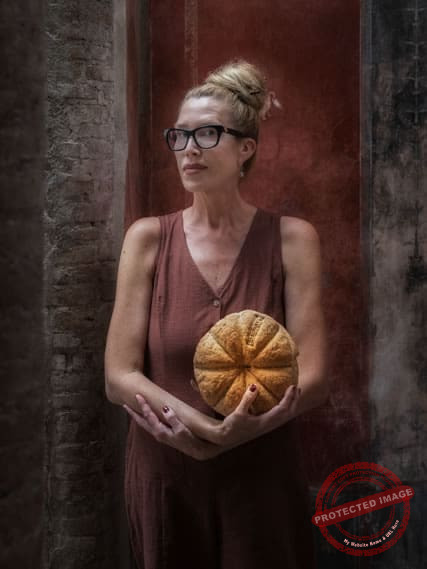
About the author:
Farrell Monaco is an award-winning Classical archaeologist and food-writer whose research centers on food, food preparation, and bread in the Roman Mediterranean. She writes regularly on the role of food and food preparation in Roman daily life on her site, Tavola Mediterranea, and publishes in both English and Italian. Farrell has also written exclusively for Atlas Obscura and BBC Travel. Her work has been featured prominently by National Geographic, Popular Science, The Atlantic, the BBC, The Guardian, The Telegraph, The Economist, Esquire Magazine, SAPIENS Magazine, Saveur Magazine and Milk Street.

Apr 26
Behind every loaf of bread is a team of workers: farmers who cultivate the grain, millers who grind it, bakers who shape and fire it, and the many hands that carry it from field to table. In the ancient world, this chain of labour was visible, shared, and woven into daily life. Bread was never just food: It was the product of collective effort, skill, and time. Remembering that labour reminds us that every loaf, past or present, is an expression of human partnership and connection. Thank you to @__al_vecchio_mulino__ for our new connection and for working with us to carry forward one of the oldest labours in human history: the making of bread. I cannot get enough of it and neither can any of you! We are kindred spirits! 🙏
.
.
#bread #roman #work #team #history
...
Apr 24
Speaking of bread and grain in the northern reaches of the Roman Empire! A fascinating new Roman ‘bread’ discovery from a Roman military context at Vindonissa (Switzerland) has just been announced. The find is described as Gebäck, a term that means ‘small baked good’ that captures both its promise and its ambiguity. Particularly intriguing to me are the questions of form and manufacture, where even subtle clues can open entirely new lines of interpretation. I’m especially excited to see how further analysis unfolds in the coming year. In the meantime, I’ve been working closely with comparative material that speaks to this very problem… more on that very soon! Stay tuned!
.
Photo: Kanton Aargau (2026)
.
.
#Bread #archaeology #ancientrome #switzerland #Vindonissa
...
Apr 23
Last week I was heavily focussed on shining a light on the breads and cakes of Pompeii, a city in the Campanian region of Italy. But did you know that a different bread and grain culture existed in the northern parts of the Roman Empire? Influenced by the types of grain that were cultivated or imported from nearby provinces, southern Italy may have seen higher volumes of durum and bread wheat, whereas northern Italy likely saw higher cultivation and import of spelt and rye! Our old boy, Pliny, did not like rye. He wrote that it was a very poor food and only served to avert starvation. Regardless, the Romans mixed it with emmer wheat to mitigate it’s bitter taste so they could use it to prepare breads and porridge. Hear more of our conversation about bread in the Roman Po Valley in episode 4 of Alice Roberts’ fascinating new TV show on Channel 4 (UK): Roman Empire by Train. Link in bio or click here: https://www.channel4.com/programmes/roman-empire-by-train-with-alice-roberts
#Roman #Bread #TV #UK #archaeology
...
Apr 22
Infine, io e Raffaele vogliamo ringraziare di cuore gli studenti universitari che abbiamo avuto il piacere di incontrare questa settimana alla Fiera dell’Archeo-Agricoltura dei Territori del Mediterraneo, provenienti dall’Italia e dall’estero. Nella foto, un gruppo meraviglioso di @uninait, @agrariaunina e Agraria Federico II, il cui entusiasmo e la genuina curiosità per l’archeologia agricola e del patrimonio culinario dell’area vesuviana sono stati al tempo stesso stimolanti e profondamente rassicuranti.
In un momento in cui il mondo appare sempre più instabile, in cui le nuove tecnologie minacciano di rimodellare le nostre professioni e, molto più preoccupante, in cui le istituzioni accademiche operano drastici tagli ai finanziamenti che mettono a rischio i programmi di archeologia classica, ci viene ricordato ciò che è veramente in gioco. Immaginare un mondo senza un patrimonio di conoscenze vivo e in continua crescita sull’antica Pompei o Roma, senza gli studiosi, i musei e gli educatori che hanno dedicato le loro vite alla conservazione e all’interpretazione del passato, equivale a immaginare un incommensurabile vuoto culturale. Non è un futuro che possiamo accettare. Dobbiamo lottare per fare in modo che non ciò non accada.
Gli studenti di archeologia classica rappresentano un potente contrasto a questa incertezza: una nuova generazione impegnata a portare avanti lo studio del mondo antico. La loro passione conferma che questo patrimonio non cadrà nell’oblio. Dobbiamo continuare a sostenere le nostre università, i musei e le istituzioni culturali, e a collaborare con i media e le case editrici per garantire che le storie del nostro passato rimangano visibili, valorizzate e protette. Non permetteremo che il nostro passato venga cancellato!
La nostra più profonda ammirazione va agli studenti di archeologia classica e agronomia di oggi. Il testimone sarà presto vostro. Continuate così, continuate a studiare e sappiate che siamo al vostro fianco.
.
.
#archeologia #agronomia #studenti #università #pompeii
...
Apr 22
Lastly, Raffaele and I wish to extend our heartfelt thanks to the university students we had the pleasure of meeting this week at Fiera dell’Archeo-Agricola del Territorio Mediterraneo, from Italy and abroad. Pictured here is a wonderful group from @uninait @agrariaunina e Agraria Federico II, whose enthusiasm for, and genuine curiosity about, the archaeology of agriculture and culinary heritage in the Vesuvian region was both invigorating and deeply reassuring.
At a moment when the world feels increasingly unstable, when emerging technologies threaten to reshape our professions and, more troublingly, when academic institutions face severe funding cuts that threaten classical archaeology programmes, we are reminded of what is truly at stake. To imagine a world without a living and growing body of knowledge of ancient Pompeii or Rome, without the scholars, museums, and educators who have dedicated their lives to preserving and interpreting the past, is to imagine an immeasurable cultural void. It is not a future we can accept. We must fight against it.
Classical archaeology students stand as a powerful counterpoint to that uncertainty: a new generation committed to carrying forward the study of the ancient world. Their passion affirms that this heritage will not fade into obscurity. We must continue to support our universities, museums, and cultural institutions, and to work alongside media and publishers to ensure that the stories of our past remain visible, valued, and protected. We will not allow our past to be erased!
Our deepest admiration to the students of classical archaeology and agronomy today. The torch will soon be yours. Keep going, keep studying, and know that we stand beside you. 💪
.
.
#archaeology #pompeii #rome #university #agriculture
...
Apr 22
Raffaele and I are still coming back down to earth after one of the busiest and most rewarding weeks we’ve ever had. We had the privilege of participating in the three-day Fiera dell’Archeo-Agricola del Territorio Mediterraneo, a conference celebrating the rich culinary heritage of the Vesuvian region, at Pompeii Archaeological Park.
Between long nights of baking and full days at Pompeii, we experienced something truly special. We leave with full hearts: grateful for new friendships, new experiences, and the chance to spend time among the generous, tireless staff and visionary leadership who steward one of the most beautiful and complex archaeological sites in the world.
Claudia Buonanno is the Officer of Architecture at Pompeii who also specializes in the management, restoration, and enhancement of green areas, landscape, and gardens. She is frequently involved in projects related to the philological reconstruction of ancient gardens and sustainable landscape maintenance within the site. Above all this, she’s also welcoming and great fun to talk to! Thank you, Claudia for your kindness and support!
.
.
#pompeii #thankyou #food #archaeology #mediterranean
...
Apr 21
Just a glimpse into the bakery work that went into our days at the Fiera dell’Archeo-Agricola del Territorio Mediterraneo in Pompei last week. This is just the tip of the iceberg! 😍 Thanks to @__al_vecchio_mulino__ for inviting us into their bakery and working with us! 🥰 We’ll be back! Like, literally. 💪
.
.
#bread #baking #archaeology #pompeii #work
...
Apr 20
Raffaele and I are still coming back down to earth today after one of the busiest and most rewarding weeks we’ve ever had. We had the privilege of participating in the three-day Fiera dell’Archeo-Agricola del Territorio Mediterraneo, a conference celebrating the rich culinary heritage of the Vesuvian region, at Pompeii Archaeological Park.
Between long nights of baking and full days at Pompeii, we experienced something truly special. We leave with full hearts: grateful for new friendships, new experiences, and the chance to spend time among the generous, tireless staff and visionary leadership who steward one of the most beautiful and complex archaeological sites in the world.
A deep and sincere thank you to the whole Grafica Cirillo family. Their printing plant, which produced all of our literature for the event, isn’t just a family business, but a community of workers who enjoy welcoming new people and new ideas daily. Plus there’s an old Heidelberg! 😃 Grazie di cuore!♥️ 🙏
.
.
#pompeii #thankyou #food #archaeology mediterranean
...
Apr 20
Raffaele and I are still coming back down to earth today after one of the busiest and most rewarding weeks we’ve ever had. We had the privilege of participating in the three-day Fiera dell’Archeo-Agricola del Territorio Mediterraneo, a conference celebrating the rich culinary heritage of the Vesuvian region, at Pompeii Archaeological Park.
Between long nights of baking and full days at Pompeii, we experienced something truly special. We leave with full hearts: grateful for new friendships, new experiences, and the chance to spend time among the generous, tireless staff and visionary leadership who steward one of the most beautiful and complex archaeological sites in the world.
We now wish to thank one of the key overseers of the event, Carlo Coppola, administrative assistant of the Pompeii Archaelogical Park. It was a sincere pleasure to meet you and work with you! Thank you for your kindness and support during the event! Sei veramente bravo!
.
.
#pompeii #thankyou #food #archaeology mediterranea
...
Email: [email protected]
Ph: 310-596-2424 (USA) | 020 3239 8691 (UK)